
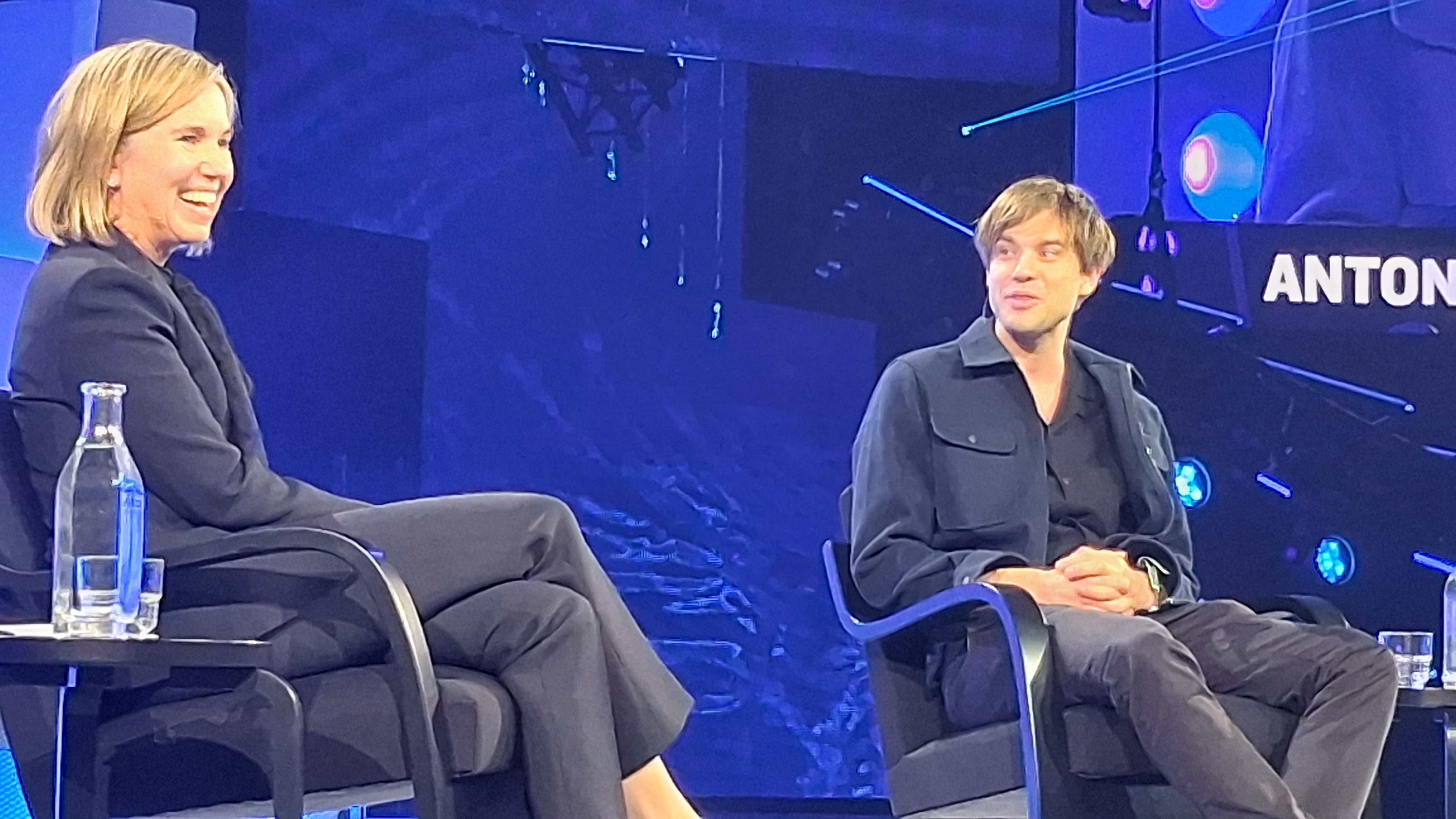
At Slush 2026 in Helsinki, Lovable co-founder and CEO Anton Osika joined Y Combinator co-founder Jessica Livingston on the Founder Stage for a fireside chat examining how company-building shifts when anyone can create software.
The session explored what happens after an initial product is built and how the next generation of startups will operate.
Osika traced Lovable’s origins back three and a half years to a simple prototype capable of building a working Snake game in a browser. Recognizing that AI models were not yet reliable on their own, he focused on embedding best-practice software architecture into an intuitive user interface that delivers instant feedback and emotional resonance.
Two years after launching the company, that bet has turned Lovable into a platform where more than one million new projects are built every single week, driving a billion monthly visits across Lovable-built applications.
When Lovable first launched, users primarily came to build standalone apps, simple websites, and prototypes. Today, Osika explained, founders are building their entire companies on the platform—from customer-facing products to internal logistics and payment systems. He highlighted a non-technical founder named Rafael, who built an AI education platform on Lovable over nearly two years and is now approaching $20 million in revenue, alongside platform-wide customer payment transactions totaling $20 million.
To support non-technical builders past the initial launch, Osika revealed that Lovable recently rolled out a browser-based collaboration and version-control system designed to function like GitHub for non-developers. The tool allows teams to manage code changes and run end-to-end tests manually before pushing updates live, removing a major bottleneck that previously slowed down non-technical founders once an application gained traction.
Livingston, who noted she had personally used Lovable to build an email search tool despite never using GitHub, pushed Osika on where software creation sits on a sliding scale between simple apps and advanced autonomous coding agents. Osika acknowledged that while deep technical researchers—such as Google DeepMind's David Silver, who appeared on stage earlier—will not use Lovable for foundational AI research, they can still use it to rapidly spin up internal operations, staffing tools, and product prototypes.
Reflecting on how running a startup has evolved since Osika went through Y Combinator with Depict.ai in 2020, both speakers pointed to a dramatic compression in the time and headcount required to build a company. Specialist technical knowledge is no longer a prerequisite for turning an idea into a functional product, allowing founders to stay closer to their users and iterate with much smaller teams.
Despite the speed of modern software development, Livingston argued that core founder psychology has not changed. Drawing on her experience evaluating thousands of startups at Y Combinator, she emphasized that successful founders still need relentless determination, formidable resilience against unexpected obstacles, and an obsession with talking to users to build something people actually want.
Osika agreed that human judgment, taste, and systems thinking are becoming even more critical as technical bottlenecks disappear.
"When anyone can build software quickly", he noted, a founder’s primary advantage lies in making fast, instinct-driven decisions and identifying which problems are worth solving over the long term.
The conversation also turned to the advantages and trade-offs of building a global technology company from Europe rather than Silicon Valley. Osika credited Stockholm’s strong design and engineering DNA—as well as the lack of Bay Area "echo chamber" noise—for allowing Lovable to think from first principles and ship product innovations ahead of competitors.
However, both speakers acknowledged a persistent transatlantic funding gap. Livingston observed that European founders frequently raise capital from U.S. investors because European venture firms can make the fundraising process overly difficult, a sentiment Osika echoed by noting that accessing rapid, large-scale growth capital remains trickier in Europe despite a growing network of supportive local alumni.
For aspiring founders looking to take advantage of this new era, Livingston advised starting with a personal pain point, building a first version immediately, and testing it with real users rather than waiting for funding or technical co-founders. Osika added that the removal of traditional technical barriers should encourage builders to pursue far more ambitious ideas rather than assuming hard problems are out of reach.
The discussion underscored a broader shift visible across Slush 2026: software creation is rapidly becoming a baseline utility rather than a specialized moat. For the founders gathered in Helsinki, the challenge ahead is no longer whether an idea can be built, but how quickly and thoughtfully they can turn that capability into an enduring business.